



"YOU MUST THINK OF YOURSELF AS ONE OF THE GREAT SPIRIT'S CREATURES OF THE WILDERNESS" Sun Bear
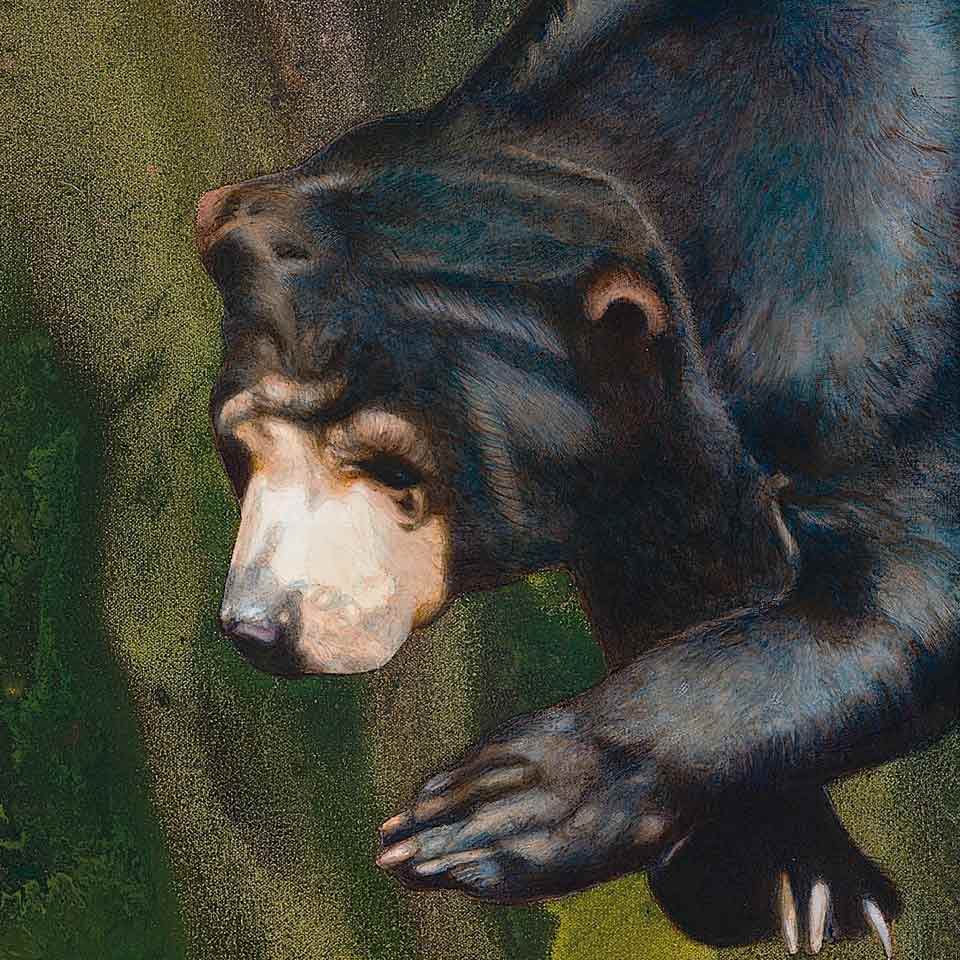
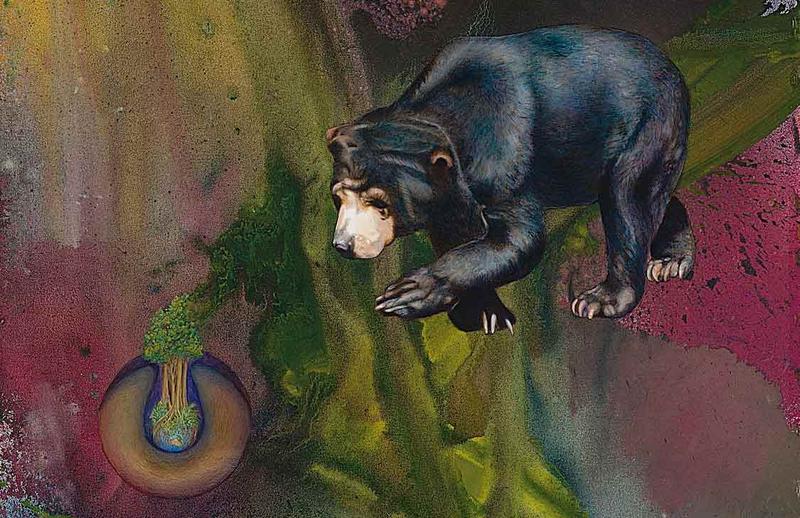
Malayan Sun Bear (Helarctos malayanus)
STATUS: CITES l, 2000 IUCN Red List Status: Insufficient data.
Although the quantitative data on population sizes or trends are lacking, it is suspected that the global population of Sun Bears has declined by over 30 percent over the past 30 years. The Sun Bear population has been reduced by habitat destruction, the Asian pet trade, and uncontrolled exploitation for body parts in Asia. They have also been found on bear ‘bile farms’ under inhumane conditions.
The Malayan Sun Bear, sometimes known as the dog bear, lives alone high in the trees in the dense lowland forests of Southeast Asia from southern China to Indonesia, including the islands of Sumatra and Borneo. They are the smallest and least known of the world’s eight living bear species (Ursidae family) and have extremely long, sickle shaped claws, a very long honey licking tongue and a short, shiny black or brownish coat. Although they are nocturnal animals, legend derives their name from the golden crescent on their throat, reminiscent of the rising sun.
It is difficult to monitor sun bear status due to their remote rain forest habitat and reclusive personality. Scientists fear the worst. The sun bears’ primary predators are humans. They are threatened by ongoing habitat destruction and fragmentation due to human encroachment and rampant deforestation of their tropical hardwoods to grow crops such as oil palms, rubber and coffee. Less than 33% of Sumatra and half of Borneo remain forested. Other threats include fires, drought, poaching for body parts and fur, retaliation killing by farmers and the pet trade. Bear gall bladders and bile are still used in traditional Chinese medicine, even though there are alternatives available that are legal, more economical and equally as beneficial. Thus far, sun bears have received very little interest and attention form conservation communities worldwide. Much work is needed to ensure the long-term survival of endangered native wildlife and forests.
Their Nature’s Hero is Siew Te Wong, Malaysian wildlife biologist, Sun Bear expert, and dedicated founder of the Bornean Sun Bear Conservation Centre. He has been an animal lover and ‘animal expert’ since he was in first grade. Wong says that sun bears are the least known and most forgotten species. He began to study the ecology of Malayan sun bear with his academic advisor in 1988 in the rainforest in Malaysian Borneo. Because of the conservation achievement from the project he was appointed to co-chair the Sun Bear Expert Team for the IUCN Species Conservation Council from 2005-2008. He never looked back. His interest and dedication grows daily.
The bears cannot survive outside the forests, which are disappearing so rapidly that in many parts of Southeast Asia, it is too late to save them. Wong says that Malaysia still has the possibility to save the last of the Southeast Asian rainforests and wildlife.

 | ||||
RAMA: AMBASSADOR FOR THE ENDANGERED ONES
Speaking Passionately on Behalf of Those who Cannot Speak

An International Traveling Exhibition
by Calley O'Neill and the Rama Team, Featuring Rama, the Artist Elephant

A JOURNEY OF ART AND SOUL FOR THE EARTH


